Loading...
Serving Flagstaff, AZ and surrounding areas. (928) 326-9529
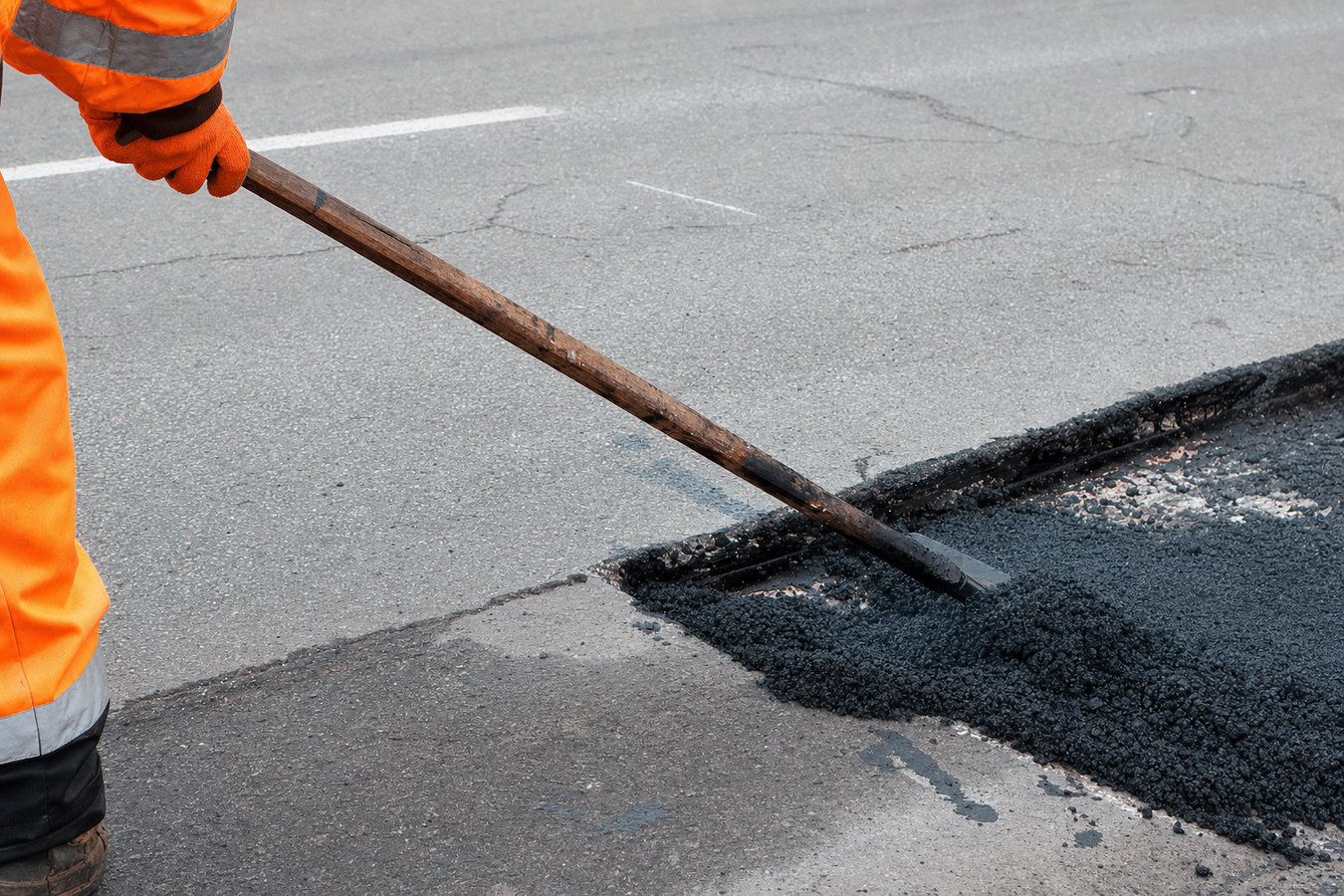
Flagstaff winters make every crack bigger. A small repair done now costs far less than the full replacement it becomes if you wait through another freeze-thaw season.
Asphalt repair in Flagstaff, AZ means removing or patching damaged sections, preparing a solid base, and placing fresh material that bonds correctly to the surrounding surface, most residential jobs are done in a single day.
At 7,000 feet, Flagstaff deals with freeze-thaw cycles that simply do not happen in Phoenix or Tucson. A crack that looks minor in September is wider in April - water got in, froze, expanded, and pushed. Once that process repeats through a full winter, what was a repair job starts looking like a replacement conversation. The key is acting before the base gets involved. If you are asking whether to repair or replace, start with our asphalt crack sealing service for early-stage surface damage, and read through this page to understand when a more involved repair makes sense.
Good asphalt repair starts with the prep work you do not see - cleaning out the damaged area, cutting clean edges, compacting the base before any new material goes in. Crews who skip those steps produce patches that fail after one Flagstaff winter. That is the most common reason a homeowner calls us after another contractor already did the work.
If cracks you noticed in fall look noticeably larger in spring, freeze-thaw cycles are at work. Water enters the crack, freezes, expands, and forces it open. Cracks wide enough to fit a coin into are already letting water reach the base - and that damage compounds fast through monsoon season if left alone.
A soft or spongy spot underfoot means the base beneath has been compromised - typically by water that entered through a crack and then froze. These spots grow with every rain and freeze cycle. Patching the surface without addressing the base underneath almost always fails within the same season.
Fresh asphalt is dark and slightly flexible. When a Flagstaff driveway turns gray and starts to crumble at the edges, UV exposure at high elevation has broken down the surface binder. This is the stage where sealing and minor repair can still save the surface - waiting longer turns a repair into a full replacement.
If water sits in low spots after a monsoon storm instead of running off, the surface has settled unevenly. Standing water at high elevation is especially damaging because it accelerates base erosion during summer storms and then freezes on top of the surface in fall.
We handle the full range of asphalt repair work - from filling narrow surface cracks with proper asphalt crack sealing to cutting out and rebuilding sections where the base has failed. Each repair starts with an honest assessment of what the damage actually is, not just what it looks like from the surface. If a section has reached the point where repair is not the right call, we will tell you that directly and explain why before any work begins.
For driveways or parking areas where damage covers a significant portion of the surface, we also offer pothole repair as a standalone service for isolated deep failures. After any repair, we recommend sealing the entire surface once the new material has cured - this protects both the patch and the surrounding asphalt from Flagstaff's UV exposure and keeps water out before next winter.
Best for narrow surface cracks caught before water has reached the base - the most cost-effective repair at the earliest stage of damage.
Best for isolated holes or sunken sections where the base needs to be compacted before new asphalt material goes in.
Best for the crumbling margins where asphalt meets soil or landscaping - a common failure point in Flagstaff due to ground movement from volcanic soils.
Best when a defined area has fully failed at the base level - we cut clean edges, rebuild the base, and lay fresh asphalt to blend with the surrounding surface.
Flagstaff sits at roughly 7,000 feet, and the freeze-thaw cycles here are not the same as what the rest of Arizona deals with. Temperatures drop well below freezing from November through March, and the ground freezes deeply. The volcanic soils common throughout the area also shift with moisture changes, stressing asphalt from below in ways that do not show up in Phoenix or Tucson. Intense UV at high elevation breaks down the surface binder faster than at lower altitudes, which is why Flagstaff driveways turn gray and brittle sooner. Repair work done in cold weather - or when overnight temperatures are still near freezing - will not bond or compact correctly. The best window is late spring through early summer, before monsoon rains arrive and while the material can cure in warm conditions.
We work across the Flagstaff area, including neighborhoods in Winona and Doney Park where older driveways have taken the full brunt of high-elevation weather cycles without recent maintenance. These are the areas where we most commonly find damage that has moved past surface cracking into base compromise - and where acting in spring rather than fall makes the difference between a repair and a full replacement bill.
Tell us what you are seeing - cracks, potholes, soft spots, or general wear. We schedule an in-person visit to walk the surface with you, assess the base, and give you a written quote. You hear back within one business day.
The contractor looks at damage depth and base condition to determine whether a surface patch, a deeper repair, or a larger resurfacing is the right call. We explain what we found and why we are recommending a particular approach before any work is agreed on.
The crew cleans out damaged areas, cuts clean edges where needed, and compacts the base before fresh asphalt material goes in. The area is shaped, compacted, and finished before the crew clears debris and trimmings from your property.
Fresh asphalt typically needs at least 24 hours before vehicle traffic for most patch repairs. Your contractor will give specific guidance based on repair size and weather conditions. Sealing is typically scheduled a few weeks to a few months after the repair has cured.
Free on-site estimate. Written quote. No surprise charges.
(928) 326-9529Most repair failures come from skipped prep - no clean edges, no base compaction, just fresh asphalt dropped over the problem. We clean, cut, and compact before any new material goes in, which is the difference between a repair that holds through winter and one that fails by spring.
We schedule repairs during Flagstaff's reliable warm-weather window - late spring through early summer - so materials bond and cure correctly before the next freeze arrives. Repairs done in cold or cooling conditions simply do not perform the same way.
We will tell you if a repair is the right call or if the base has failed to the point where replacement makes more sense. Pushing a homeowner toward a repair when replacement is the better investment is not how we work, and we have the reputation in Flagstaff to back that up.
Our material choices and repair methods follow guidelines from the Asphalt Institute, a leading technical body for asphalt materials and mix standards. That means we use commercial-grade materials and bonding methods, not hardware-store products that fail after one freeze.
Flagstaff homeowners call us back because the repairs we do hold through winter. That is the simplest measure of whether a repair contractor is worth hiring here.
Seal surface cracks early to keep water out before freeze-thaw cycles turn them into bigger problems.
Learn MoreTargeted pothole repair for isolated deep failures where the base underneath needs rebuilding.
Learn MoreSpring slots fill fast - get your repair on the calendar before monsoon season arrives and makes the damage worse.