Loading...
Serving Flagstaff, AZ and surrounding areas. (928) 326-9529
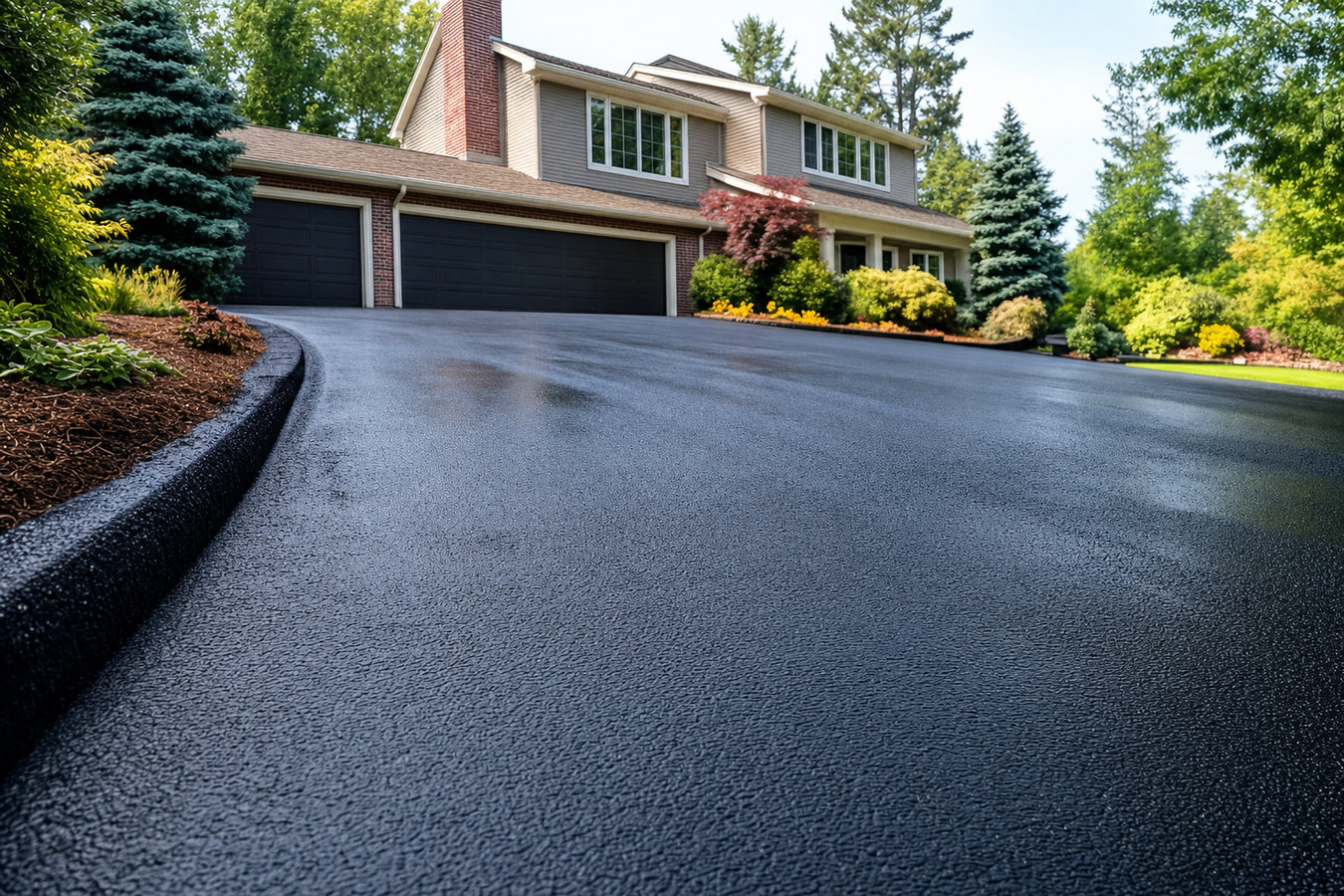
Standing water on your driveway after every monsoon storm is not normal. We build drainage systems that move water away from your pavement and foundation, so your asphalt survives Flagstaff winters intact.
Drainage solutions in Flagstaff redirect water away from your pavement and foundation using channel drains, catch basins, French drains, or surface regrading; most residential jobs are completed in one to two days and stop the pooling and cracking cycle that Flagstaff winters accelerate.
At 7,000 feet, water that sits on or beside your asphalt in the summer becomes a freeze-thaw problem all winter long. Every time that trapped moisture freezes overnight and thaws the next afternoon, it widens cracks and softens the base beneath your pavement. Fixing drainage is not just about dry driveways - it is about keeping your asphalt intact through the conditions Flagstaff throws at it year-round. If you are already seeing edge crumbling or recurring spring cracks, it is worth pairing drainage work with speed bump installation or reviewing your full paved surface with a contractor.
If standing water remains on your asphalt an hour or more after Flagstaff's monsoon rains stop, your surface is not draining properly. Over time, that pooling softens the base and speeds up cracking and pothole formation. It is a visible sign the problem is already progressing.
Finding cracks in spring that were not there in fall is a classic sign that water has been getting under your pavement and freezing. At Flagstaff's elevation, that freeze-thaw cycle happens repeatedly from November through March. Better drainage stops the water from reaching the base in the first place.
Rainwater or snowmelt flowing toward your home instead of away from it is a serious problem that extends beyond the pavement. Water near a foundation can cause structural damage over time. Regrading or adding curbing redirects that flow to a safe outlet before it reaches the building.
Soft, crumbling edges or sections that have settled lower than the surrounding surface indicate that water has been undermining the base. This is especially common in Flagstaff where monsoon runoff can erode soil alongside a driveway with no curbing or channel to contain it.
Every drainage project starts with understanding how water actually moves across your specific property. We walk the site, assess slope and flow patterns, and then design a system sized for Flagstaff's monsoon-volume runoff, not just a light drizzle. For properties with crumbling pavement edges that need to be addressed alongside new drainage, we can coordinate grading and excavation to correct the base before any new surface work begins.
Where drainage work uncovers deteriorated asphalt that needs replacing, we handle that too. Catch basins and channel drains that require cutting into existing pavement can be paired with fresh hot-mix sections so you end up with a complete solution rather than a patchwork fix. We also account for Flagstaff's ponderosa pine debris when sizing drain openings, because a drain that clogs after every storm is not really solving the problem.
Best for driveways with a single low point or a garage apron that collects water during heavy monsoon downpours.
Suited for larger paved areas or lots where multiple flow paths need to be collected and directed to a single outlet.
A good fit for properties where subsurface moisture is rising into the base, particularly on lots with dense volcanic soil that sheds water rather than absorbing it.
Ideal when the pavement or surrounding soil simply slopes the wrong direction and needs to be reshaped before any drain installation makes sense.
Flagstaff's monsoon season brings intense, fast-moving storms that can overwhelm drainage systems designed for slower rainfall. The city's volcanic soil and rocky substrate do not absorb water quickly, so runoff moves across surfaces in a sheet rather than soaking in. A drain that might be adequate in a drier climate can be completely overwhelmed here in July or August. We size systems for the volume and speed of flow that Flagstaff storms produce, and we position outlets to handle that surge without eroding surrounding soil or sending water onto neighboring properties. Residents in Doney Park and Flagstaff Ranch know this firsthand, where drainage issues surface quickly after each monsoon season.
Freeze-thaw conditions compound the monsoon drainage problem. Water that gets under asphalt in the wet season is still there when temperatures drop in November, and it expands as it freezes, cracking the pavement from below. Fixing drainage before winter means that water has nowhere to hide under your surface. It also means you are not dealing with the same spring repair cycle year after year. Properties with mature ponderosa pines nearby face an added challenge: pine needle debris can clog standard drains quickly, so we design with cleanout access and appropriately sized openings to reduce maintenance burden.
Reach out by phone or through our contact form and we will reply within one business day to schedule a time to walk your property. No site visit means no accurate quote - every lot drains differently, and we will not price a job we have not seen.
We walk the property, trace how water currently moves, and identify where it needs to go. You receive a written estimate that breaks down the work and cost clearly before any commitment is made.
If the drainage work connects to the public right-of-way or street gutter, we apply for the city permit on your behalf before scheduling the job. This typically adds a few days to the timeline but is a normal part of the process.
The crew arrives with the equipment for your specific job, completes the work, and removes all debris before leaving. We walk the finished system with you and, where possible, run a hose to confirm water flows the way it should.
We reply within one business day, there is no pressure, and your estimate is free.
(928) 326-9529We size every drainage system for the fast, high-volume runoff Flagstaff's monsoon storms produce - not for a light drizzle. That distinction matters when two inches of rain arrive in an hour and need to move off your property without pooling or erosion.
At 7,000 feet, drainage work must account for repeated freezing and thawing from November through March. We choose materials and installation methods that hold up through those cycles, so the system performs as well in year three as it does in year one.
Arizona requires a state contractor's license before performing paving and drainage work. You can confirm any contractor's license status directly through the Arizona Registrar of Contractors before work begins.
Every job comes with a written description of the work and cost before anything starts. When drainage connects to the street or city right-of-way, we pull the required Flagstaff permit on your behalf so you are not exposed to fines or required tear-outs later.
A drainage system that works in Flagstaff's climate needs more thought than one installed in a drier, lower-elevation Arizona city. We bring that local knowledge to every project, from the drain sizing to the outlet placement to the pipe materials we specify near mature pine roots.
Add a physical traffic-calming feature to your driveway or parking area after drainage work is complete.
Learn MoreCorrect surface slope and base conditions before drainage systems are installed for long-term results.
Learn MoreMonsoon season does not wait, and neither does water damage to your pavement - call us today for a free on-site estimate.